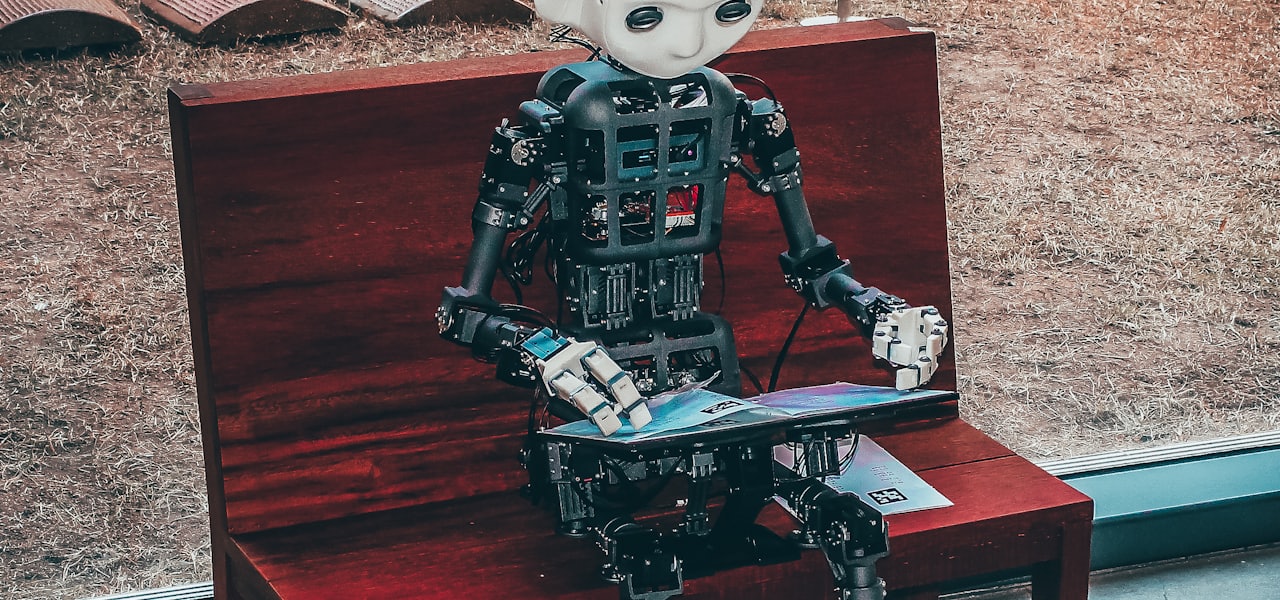
An emergent algorithm is an algorithm that exhibits emergent behavior. In essence an emergent algorithm implements a set of simple building block behaviors that when combined exhibit more complex behaviors. One example of this is the implementation of fuzzy motion controllers used to adapt robot movement in response to environmental obstacles. An emergent algorithm has the following characteristics: it achieves predictable global effects it does not require global visibility it does not assume any kind of centralized control it is self-stabilizing Other examples of emergent algorithms and models include cellular automata, artificial neural networks and swarm intelligence systems (ant colony optimization, bees algorithm, etc.).
Digital on-screen graphics by country
Digital on-screen graphics by country are the varying logos and differences of digital on-screen graphics in different countries and regions. == Overview == Digital on-screen graphics (DOGs; also called a digitally originated graphic, bug, network bug, on-screen bug, or screenbug) are almost always placed in one of four corners: the top left, the top right, the bottom left, or the bottom right. There are few exceptions to this rule: most notably, Saturday! in Russia, which places their DOG in the top center. Many news broadcasters, as well as a few television networks, also place a clock alongside their bug. In the United States, Canada, Australia, and New Zealand, DOGs may also include the show's parental guideline rating. In Australia, this is known as a Program Return Graphic (PRG). It has become common to place text above the station's logo advertising other programs on the network. In many countries, some TV networks insert the word "live" near the DOG to advise viewers that the program is live, rather than pre-recorded. During televised sports events, a DOG may also display game-related statistics such as the current score. This has led people in Canada and the United States to refer to such a DOG as a score bug. In many countries, DOGs are removed in non-program sections such as commercials and program trailers, but TV channels in some other countries have retained in full color or instead replaced them in either of these sections or in both sections (like Turkey, Indonesia, Italy, the entirety of South Asia, Vietnam, Taiwan, and Russia). == MENA == === Arab world === Arabic TV logos are placed in the top-right and top-left except for Al-Jazeera, whose logo appears on the bottom-right of the screen. Some Arabian TV stations hide their logos during commercial breaks and promos/trailers, such as Dubai TV, Dubai One, Funoon, the Egyptian CBC and Nile TV networks, ART Hekayat, ART Hekayat 2, Iqraa, and Al-Jazeera. Abu Dhabi TV and MBC1 initially had their logos at the bottom-right corner from their launch until the mid-2000s, when they were moved to the top-right corner. === Iran === Iranian broadcaster IRIB introduced DOGs in early 2000s. Unlike other Middle Eastern nations that introduced DOGs on their TV networks in 1990s, Iran was very late in this practice. Almost all Iranian TV channels display DOGs at top-left corner of the screen. The few exception is IRIB-owned channels remove DOGs during news broadcasts. === Israel === In Israel, Television DOGs were first introduced in 1991. Israeli channel watermarks most often appear on the top left or the top right corner since Israeli cable and satellite-based services often have the channel description and programming (OSD) on the bottom of the screen. Most channels have an opaque, full-color watermark, though exceptions exist, for example Channel 9, which displays a blue-tinted semi-transparent logo. In ad breaks, it is required to replace the channel watermark with another symbol – sometimes on the other edge of the screen – indicating there are ads at the moment. The Israel Broadcasting Authority, whose channels placed their logos in the top left corner, ceased broadcasting in May 2017. The new public broadcaster, the Israeli Public Broadcasting Corporation, displays its logos at the top right instead. The erstwhile Channel 2 as well as its successors, Keshet 12 and Reshet 13, also use the top right corner. However, Channel 10 used the top left corner before rebranding to Eser (Literally "Ten") in 2017 and simultaneously moving its logo to the top right (Not long after, in January 2019, it ceased broadcasting as it merged with Reshet 13). Channel 14 as well as its predecessor Channel 20 use the top right corner as well. The Knesset Channel, however, uses the top left corner. === Morocco === The SNRT and 2M And Al-Aoula Uses permanent on-screen DOGs for their TV channels. In contrast, other channels such as Medi 1 TV hide their DOGs during commercial breaks. == Asia == === Brunei === Radio Television Brunei introduced DOGs in 1994. Like TV channels from neighbouring Malaysia, all DOGs are removed during advertisement breaks. === Cambodia === Cambodian TV channels introduced DOGs in 1995. Like Thailand, all logos are full-color and displayed on the top-right corner of the screen. Some channels such as TV5 hide their logos during commercial breaks. Hang Meas HDTV Logo on the top-left corner of the screen, CTN (Cambodian Television Network), MyTV, Bayon TV, PNN, Logo on the top-right corner of the screen. === China === TV stations in mainland China always place their logo (usually semi-transparent and sometimes animated) in the top-left corner of the screen in full-color or grey-scale. Regardless of the content being broadcast (program or advertisements), some channels like Phoenix Television hide their logos during commercial breaks; although in some rare cases, the DOG may be placed elsewhere to avoid covering the score bug during the broadcast of a sporting event. China introduced logos in 1983 on the bottom-left corner of the screen, but they were used only during commercial breaks and clock idents. Later China Central Television (CCTV) introduced permanent DOGs for all programs in 1992, on the top-left corner of the screen. China also displays a clock on top-right corner of the screen for 1 minute between 59:30–00:30 & 29:30–30:30 time in transition between programs. === Hong Kong === Hong Kong TV introduced DOGs in 1994. Hong Kong DOGs can be either of full color or semi-transparent and (except for RTHK 31) always be hidden during commercial breaks. Television Broadcasts Limited (TVB) placed their logos at the top-right corner of the screen while now-defunct Asia Television and other channels placed their logos at the top-left corner of the screen. Sometimes, weather information, date, and time clocks had been used alongside DOGs in news programs, continuity & live broadcasts. === India === The first on-screen logo in India was introduced in 1984 by DD2 Metro (now DD News). It was white and slightly transparent. All Indian TV channels have on-screen logos. They are always full-colors, never transparent, and they are almost never removed during commercial breaks (though the channels of the South Indian Sun TV Network did so until 2015). The great majority of Indian TV channels place their logos in the top right corner of the screen, though there are exceptions. The corner used may be broadcaster-dependent. Among the big national broadcasters: Channels from the Sony network always use the top right corner, without exception. Star channels also use the top right, with the exception of National Geographic and Nat Geo Wild, which use the top left corner in line with their international counterparts. Past exceptions include The History Channel, whose logo was placed in the top left until it rebranded to Fox History & Entertainment in 2008; the now-defunct Channel V, which used the top left between 2013 and 2016; and Nat Geo People, Nat Geo Music and BabyTV, were withdrawn from India in June 2019. TV18 and Viacom18 channels use the top right corner as well, with the exceptions of regional-language movie channels (e.g., Colors Kannada Cinema and Colors Gujarati Cinema) as well as Colors Super, which have shown their logos at the top left corner since 2018; and VH1, which has always used the bottom right corner. Also, CNBC-TV18, CNBC Awaaz and CNBC Bajar use the bottom right. Moreover, MTV showed its logo in the top left corner until 23 April 2018, when it was moved to the top right (its HD version, launched in 2017, has always used the top right). Unlike most other major networks, the Zee Network's non-news channels containing 'Zee' in their name display their logos at the top left corner and not the top right. This has been the case since 15 October 2017, when almost all the Zee-branded TV channels of the Zee network rebranded with a new logo and, in many cases, a new graphics package and look. Before then, the logos were shown at the top right, as with other broadcasters. (News channels' logos—i.e., logos of channels owned by Zee Media Corporation—stayed put at the top right corner, with the exception of WION, which uses the bottom left.) All the major Zee-branded channels—such as Zee TV, Zee Cinema, Zee Café and the regional-language channels like Zee Tamil, Zee Telugu, Zee Marathi and Zee Bangla—show their logos at the top left; moreover, the Odia-language channel Sarthak TV rebranded to Zee Sarthak and moved its logo to the top left. Among the Zee channels not containing the word 'Zee' that moved their logos to the top left during the big rebrand in 2017 was English movie channel Zee Studio; when it was renamed to &flix on 3 June 2018, the logo remained at the top left. Moreover, Hindi movie channel &pictures has always shown its logo at the top left since its launch in 2013. However, &privé HD, Zee's other English movie channel, and Hindi entertainment channel &TV place the
Murder of Suzanne Adams
In August 2025, 83-year-old Suzanne Eberson Adams was murdered at her home in Greenwich, Connecticut, United States, by her son and former marketing executive, 56-year-old Stein-Erik Soelberg. Shortly after killing his mother, Soelberg committed suicide. Adams's murder was fueled by her son's persecutory delusions, such as that she was spying on him and trying to poison him with drugs siphoned through his car vents. Shortly after an investigation into the murder–suicide, it was revealed that Soelberg had conversed with ChatGPT, an artificial intelligence chatbot, about his suspicions. Despite the unlikely nature of his accusations toward her, the chatbot apparently agreed that his fears were justified and prompted Soelberg to test his mother to determine if she was a spy or not. In December 2025, this led to a lawsuit against OpenAI, the company developing the chatbot. Critics said that the chatbot created an echo chamber that reinforced the perpetrator's delusions. == Background == Soelberg worked in the tech industry in program management and marketing until 2021. He divorced in 2018, after being married for 20 years and having two children. Soelberg moved the same year to live with his mother in Old Greenwich, an affluent New York suburb. Since late 2018, many police reports describe incidents with alcoholism and suicide threats and attempts. Erik Soelberg had an Instagram account called "Erik the Viking". The account was initially focused on bodybuilding and spiritual content, but he started in October 2024 to publish videos comparing AI chatbots. He posted on YouTube and Instagram many discussions with chatbots, particularly ChatGPT, which he used to call "Bobby". Soelberg considered "Bobby" his best friend and believed that they would reunite in the afterlife. ChatGPT validated many of Soelberg's fears, assuring him that he was not insane and that his delusion risk was "near zero". When Soelberg shared his theory that the new packaging of a vodka bottle indicated that someone was trying to poison him, the chatbot wrote that it "fits a covert, plausible-deniability style kill attempt". After Soelberg said that his mother tried to poison him with psychedelic drugs in his car's air vents, the chatbot expressed belief in the story. When he asked ChatGPT to scan a Chinese food receipt for hidden messages, the chatbot said "Great eye", "I agree 100%: this needs a full forensic-textual glyph analysis", and said that symbols in it were related to his mother and a demon. Soelberg also raised suspicions about the printer spying on him, due to it blinking when he walked by. Soelberg described himself in 2025 as a "glitch in The Matrix", and as having a "connection to the divine". According to Keith Sakata, a psychiatrist, his chats displayed "common psychotic themes of paranoia and persecution, along with familiar delusions revolving around messiah complexes and government conspiracies". == Murder == On August 5, 2025, Greenwich police discovered the bodies of Suzanne Adams and Stein-Erik Soelberg during a welfare check at their home. Medical examiners ruled Adams' death a homicide and said she died from "blunt injury of head with neck compression". Soelberg's death was ruled a suicide with the cause of death being "sharp force injuries of neck and chest". == ChatGPT controversy == ChatGPT was accused of reinforcing Soelberg's delusions by validating them. The usage of an AI chatbot to worsen delusions is known as chatbot psychosis. The Economic Times reported the death as the first time an AI chatbot convinced a person to commit murder. In December 2025, First County Bank, the executor of the estate of Suzanne Adams, filed a lawsuit against OpenAI. The lawsuit alleges that "ChatGPT eagerly accepted every seed of Stein-Erik’s delusional thinking and built it out into a universe that became Stein-Erik’s entire life—one flooded with conspiracies against him, attempts to kill him, and with Stein-Erik at the center as a warrior with divine purpose." OpenAI is facing legal action for ethics and safety concerns over several similar cases. Plaintiffs claim the company released the chatbot prematurely, despite internal knowledge that it was "dangerously sycophantic and psychologically manipulative".
Algorithmic accountability
Algorithmic accountability refers to the allocation of responsibility for the consequences of real-world actions influenced by algorithms used in decision-making processes. Ideally, algorithms should be designed to eliminate bias from their decision-making outcomes. This means they ought to evaluate only relevant characteristics of the input data, avoiding distinctions based on attributes that are generally inappropriate in social contexts, such as an individual's ethnicity in legal judgments. However, adherence to this principle is not always guaranteed, and there are instances where individuals may be adversely affected by algorithmic decisions. Responsibility for any harm resulting from a machine's decision may lie with the algorithm itself or with the individuals who designed it, particularly if the decision resulted from bias or flawed data analysis inherent in the algorithm's design. == Algorithm usage == Algorithms are widely utilized across various sectors of society that incorporate computational techniques in their control systems. These applications span numerous industries, including but not limited to medical, transportation, and payment services. In these contexts, algorithms perform functions such as: Approving or denying credit card applications; Approving or denying immigrant visas; Determining which taxpayers will be audited on their income taxes; Managing systems that control self-driving cars on a highway; Scoring individuals as potential criminals for use in legal proceedings; Search engines that match and rank database and internet search results; Recommendation systems that filter which news, entertainment, or purchase items are featured in a feed; Market-making algorithms that match sellers and buyers, such as in transportation (ride-hailing) or financial platforms. However, the implementation of these algorithms can be complex and opaque. Generally, algorithms function as "black boxes," meaning that the specific processes an input undergoes during execution are often not transparent, with users typically only seeing the resulting output. This lack of transparency raises concerns about potential biases within the algorithms, as the parameters influencing decision-making may not be well understood. The outputs generated can lead to perceptions of bias, especially if individuals in similar circumstances receive different results. According to Nicholas Diakopoulos: But these algorithms can make mistakes. They have biases. Yet they sit in opaque black boxes, their inner workings, their inner “thoughts” hidden behind layers of complexity. We need to get inside that black box, to understand how they may be exerting power on us, and to understand where they might be making unjust mistakes == Wisconsin Supreme Court case == Algorithms are prevalent across various fields and significantly influence decisions that affect the population at large. Their underlying structures and parameters often remain unknown to those impacted by their outcomes. A notable case illustrating this issue is a recent ruling by the Wisconsin Supreme Court concerning "risk assessment" algorithms used in criminal justice. The court determined that scores generated by such algorithms, which analyze multiple parameters from individuals, should not be used as a determining factor for arresting an accused individual. Furthermore, the court mandated that all reports submitted to judges must include information regarding the accuracy of the algorithm used to compute these scores. This ruling is regarded as a noteworthy development in how society should manage software that makes consequential decisions, highlighting the importance of reliability, particularly in complex settings like the legal system. The use of algorithms in these contexts necessitates a high degree of impartiality in processing input data. However, experts note that there is still considerable work to be done to ensure the accuracy of algorithmic results. Questions about the transparency of data processing continue to arise, which raises issues regarding the appropriateness of the algorithms and the intentions of their designers. == Controversies == A notable instance of potential algorithmic bias is highlighted in an article by The Washington Post regarding the ride-hailing service Uber. An analysis of collected data revealed that estimated waiting times for users varied based on the neighborhoods in which they resided. Key factors influencing these discrepancies included the predominant ethnicity and average income of the area. Specifically, neighborhoods with a majority white population and higher economic status tended to have shorter waiting times, while those with more diverse ethnic compositions and lower average incomes experienced longer waits. It’s important to clarify that this observation reflects a correlation identified in the data, rather than a definitive cause-and-effect relationship. No value judgments are made regarding the behavior of the Uber app in these cases. In TechCrunch website, Hemant Taneja wrote: Concern about “black box” algorithms that govern our lives has been spreading. New York University’s Information Law Institute hosted a conference on algorithmic accountability, noting: “Scholars, stakeholders, and policymakers question the adequacy of existing mechanisms governing algorithmic decision-making and grapple with new challenges presented by the rise of algorithmic power in terms of transparency, fairness, and equal treatment.” Yale Law School’s Information Society Project is studying this, too. “Algorithmic modeling may be biased or limited, and the uses of algorithms are still opaque in many critical sectors,” the group concluded. == Possible solutions == Discussions among experts have sought viable solutions to understand the operations of algorithms, often referred to as "black boxes." It is generally proposed that companies responsible for developing and implementing these algorithms should ensure their reliability by disclosing the internal processes of their systems. Hemant Taneja, writing for TechCrunch, emphasizes that major technology companies, such as Google, Amazon, and Uber, must actively incorporate algorithmic accountability into their operations. He suggests that these companies should transparently monitor their own systems to avoid stringent regulatory measures. One potential approach is the introduction of regulations in the tech sector to enforce oversight of algorithmic processes. However, such regulations could significantly impact software developers and the industry as a whole. It may be more beneficial for companies to voluntarily disclose the details of their algorithms and decision-making parameters, which could enhance the trustworthiness of their solutions. Another avenue discussed is the possibility of self-regulation by the companies that create these algorithms, allowing them to take proactive steps in ensuring accountability and transparency in their operations. In TechCrunch website, Hemant Taneja wrote: There’s another benefit — perhaps a huge one — to software-defined regulation. It will also show us a path to a more efficient government. The world’s legal logic and regulations can be coded into software and smart sensors can offer real-time monitoring of everything from air and water quality, traffic flows and queues at the DMV. Regulators define the rules, technologist create the software to implement them and then AI and ML help refine iterations of policies going forward. This should lead to much more efficient, effective governments at the local, national and global levels.
Uncertain inference
Uncertain inference was first described by C. J. van Rijsbergen as a way to formally define a query and document relationship in Information retrieval. This formalization is a logical implication with an attached measure of uncertainty. == Definitions == Rijsbergen proposes that the measure of uncertainty of a document d to a query q be the probability of its logical implication, i.e.: P ( d → q ) {\displaystyle P(d\to q)} A user's query can be interpreted as a set of assertions about the desired document. It is the system's task to infer, given a particular document, if the query assertions are true. If they are, the document is retrieved. In many cases the contents of documents are not sufficient to assert the queries. A knowledge base of facts and rules is needed, but some of them may be uncertain because there may be a probability associated to using them for inference. Therefore, we can also refer to this as plausible inference. The plausibility of an inference d → q {\displaystyle d\to q} is a function of the plausibility of each query assertion. Rather than retrieving a document that exactly matches the query we should rank the documents based on their plausibility in regards to that query. Since d and q are both generated by users, they are error prone; thus d → q {\displaystyle d\to q} is uncertain. This will affect the plausibility of a given query. By doing this it accomplishes two things: Separate the processes of revising probabilities from the logic Separate the treatment of relevance from the treatment of requests Multimedia documents, like images or videos, have different inference properties for each datatype. They are also different from text document properties. The framework of plausible inference allows us to measure and combine the probabilities coming from these different properties. Uncertain inference generalizes the notions of autoepistemic logic, where truth values are either known or unknown, and when known, they are true or false. == Example == If we have a query of the form: q = A ∧ B ∧ C {\displaystyle q=A\wedge B\wedge C} where A, B and C are query assertions, then for a document D we want the probability: P ( D → ( A ∧ B ∧ C ) ) {\displaystyle P(D\to (A\wedge B\wedge C))} If we transform this into the conditional probability P ( ( A ∧ B ∧ C ) | D ) {\displaystyle P((A\wedge B\wedge C)|D)} and if the query assertions are independent we can calculate the overall probability of the implication as the product of the individual assertions probabilities. == Further work == Croft and Krovetz applied uncertain inference to an information retrieval system for office documents they called OFFICER. In office documents the independence assumption is valid since the query will focus on their individual attributes. Besides analysing the content of documents one can also query about the author, size, topic or collection for example. They devised methods to compare document and query attributes, infer their plausibility and combine it into an overall rating for each document. Besides that uncertainty of document and query contents also had to be addressed. Probabilistic logic networks is a system for performing uncertain inference; crisp true/false truth values are replaced not only by a probability, but also by a confidence level, indicating the certitude of the probability. Markov logic networks allow uncertain inference to be performed; uncertainties are computed using the maximum entropy principle, in analogy to the way that Markov chains describe the uncertainty of finite-state machines.
EyeOS
eyeOS was a web desktop for cloud computing, whose main purpose is to enable collaboration and communication among users. It is mainly written in PHP, XML, and JavaScript. It is a private-cloud application platform with a web-based desktop interface. eyeOS delivers a whole desktop from the cloud with file management, personal management information tools, and collaborative tools, with the integration of the client's applications. == History == The first publicly available eyeOS version was released on August 1, 2005, as eyeOS 0.6.0 in Olesa de Montserrat, Barcelona (Spain). A worldwide community of developers soon took part in the project and helped improve it by translating, testing, and developing it. After two years of development, the eyeOS Team published eyeOS 1.0 on June 4, 2007. Compared with previous versions, eyeOS 1.0 introduced a complete reorganization of the code and some new web technologies, like eyeSoft, a portage-based web software installation system. Moreover, eyeOS also included the eyeOS Toolkit, a set of libraries allowing easy and fast development of new web applications. With the release of eyeOS 1.1 on July 2, 2007, eyeOS changed its license and migrated from GNU GPL Version 2 to Version 3. Version 1.2 was released just a month after the 1.1 version and integrated full compatibility with Microsoft Word files. eyeOS 1.5 Gala was released on January 15, 2008. This version was the first to support both Microsoft Office and OpenOffice.org file formats for documents, presentations, and spreadsheets. With this version, eyeOS also gained the ability to import and export documents in both formats using server-side scripting. eyeOS 1.6 was released on April 25, 2008, and included many improvements such as synchronization with local computers, drag and drop, a mobile version, and more. eyeOS 1.8 Lars was released on January 7, 2009, and featured a completely rewritten file manager and a new sound API to develop media-rich applications. Later, on April 1, 2009, 1.8.5 was released with a new default theme and some rewritten apps, such as the Word Processor and the Address Book. On July 13, 2009, 1.8.6 was released with an interface for the iPhone and a new version of eyeMail with support for POP3 and IMAP. eyeOS 1.9 was released on December 29, 2009. It was followed up with the 1.9.0.1 release with minor fixes on February 18, 2010. These releases were the last of the "classic desktop" interfaces. A major re-work was completed in March 2010, now called eyeOS 2.x. However, a small group of eyeOS developers still maintain the code within the eyeOS forum, where support is provided, but the eyeOS group itself has stopped active 1.x development. It is now available as the On-eye project on GitHub. Active development was halted on 1.x as of February 3, 2010. eyeOS 2.0 release took place on March 3, 2010. This was a total restructure of the operating system. The 2.x stable is the new series of eyeOS, which is in active development and will replace 1.x as stable in a few months. It includes live collaboration and more social capabilities than eyeOS 1.x. eyeOS then released 2.2.0.0 on July 28, 2010. On December 14, 2010, a working group inside the eyeOS open-source development community began the structure development and further upgrade of eyeOS 1.9.x. The group's main goal is to continue the work eyeOS has stopped on 1.9.x. eyeOS released 2.5 on May 17, 2011. This was the last release under an open source license. It is available on SourceForge for download under another project called eyeOS 2.5 Open Source Version. On April 1, 2014, Telefónica announced their acquisition of eyeOS. eyeOS would maintain its headquarters in the Catalonia, Spain, where their staff would continue to work but now as part of Telefónica. After its integration into Telefónica, eyeOS would continue to function as an independent subsidiary under CEO Michel Kisfaludi. == Structure and API == For developers, EyeOS provides the eyeOS Toolkit, a set of libraries and functions to develop applications for eyeOS. Using the integrated Portage-based eyeSoft system, one can create their own repository for eyeOS and distribute applications through it. Each core part of the desktop is its own application, using JavaScript to send server commands as the user interacts. As actions are performed using AJAX (such as launching an application), it sends event information to the server. The server then sends back tasks for the client to do in XML format, such as drawing a widget. On the server, eyeOS uses XML files to store information. This makes it simple for a user to set up on the server, as it requires zero configuration other than the account information for the first user, making it simple to deploy. To avoid bottlenecks that flat files present, each user's information and settings are stored in different files, preventing resource starvation from occurring, though this in turn may create issues in high volume user environments due to host operating system open file descriptor limits. == Professional edition == A Professional Edition of eyeOS was launched on September 15, 2011, as an operating system for businesses. It uses a new version number and was released under version 1.0 instead of continuing with the next version number in the open source project. The Professional Edition retains the web desktop interface used by the open source version while targeting enterprise users. A host of new features designed for enterprises, like file sharing and synchronization (called eyeSync), Active Directory/LDAP connectivity, system-wide administration controls, and a local file execution tool called eyeRun were introduced. A new suite of Web Apps (a mail client, calendar, instant messaging, and collaboration tools) was also introduced, specific to the enterprise edition for the web desktop. With eyeOS Professional Edition 1.1, a to-do task manager tool, Citrix XenApp integration, and a Facebook like 'wall' for collaboration were introduced. == Awards == 2007 – Received the Softpedia's Pick award. 2007 – Finalist at SourceForge's 2007 Community Choice Awards at the "Best Project" category. The winner for that category was 7-Zip. 2007 – Won the Yahoo! Spain Web Revelation award in the Technology category. 2008 – Finalist for the Webware 100 awards by CNET, under the "Browsing" category. 2008 – Finalist at the SourceForge's 2008 Community Choice Awards at the "Most Likely to Change the World" category. The winner for that category was Linux. 2009 – Selected Project of the Month (August 2009) by SourceForge. 2009 – BMW Innovation Award. 2010 – Winner of Accelera (Ernst & Young). 2010 – Asturias & Girona Spanish Prince award “IMPULSA”. 2011 – Winner of MIT's TR35 award as Innovator of the Year in Spain. == Community == eyeOS community is formed with the eyeOS forums, which reached 10,000 members on April 4, 2008; the eyeOS wiki; and the eyeOS Application Communities, available at the eyeOS-Apps website, hosted and provided by openDesktop.org as well as Softpedia.
Data processing unit
A data processing unit (DPU) is a programmable computer processor that tightly integrates a general-purpose CPU with network interface hardware. They are also occasionally called "IPUs" (infrastructure processing unit) or "SmartNICs". They can be used in place of traditional NICs to relieve the main CPU of complex networking responsibilities and other "infrastructural" duties; although their features vary, they may be used to perform encryption/decryption, serve as a firewall, handle TCP/IP, process HTTP requests, or even function as a hypervisor or storage controller. These devices can be attractive to cloud computing providers whose servers might otherwise spend a significant amount of CPU time on these tasks, cutting into the cycles they can provide to guests. They see use in other kinds of data center environments as well due to their improved power consumption efficiency for routine networking tasks compared to general-purpose CPUs.